The Rule of Three in Branding
The best brand messages are usually the ones people can repeat without thinking.
That matters for every kind of organisation. Whether you sell products, deliver services, or support specialist communities, your brand has to work hard wherever attention is short: on a website, on packaging, at an event, on social media, in a meeting, or in someone’s inbox.
You may have a brilliant offer, a loyal audience and years of experience behind what you do. But if people cannot quickly understand what makes you different, they will struggle to remember you.
That is where the rule of three comes in. Three is the magic number because it gives people just enough to remember, without giving them too much to process.
Why three works in branding
Three is one of the simplest ways to make a message stick. We’re used to receiving information in threes from our earliest years, starting with A, B, C, and 1, 2, 3. Dividing content into three creates a natural rhythm: small, medium, large; good, better, best; gold, silver and bronze. It feels complete without becoming complicated.
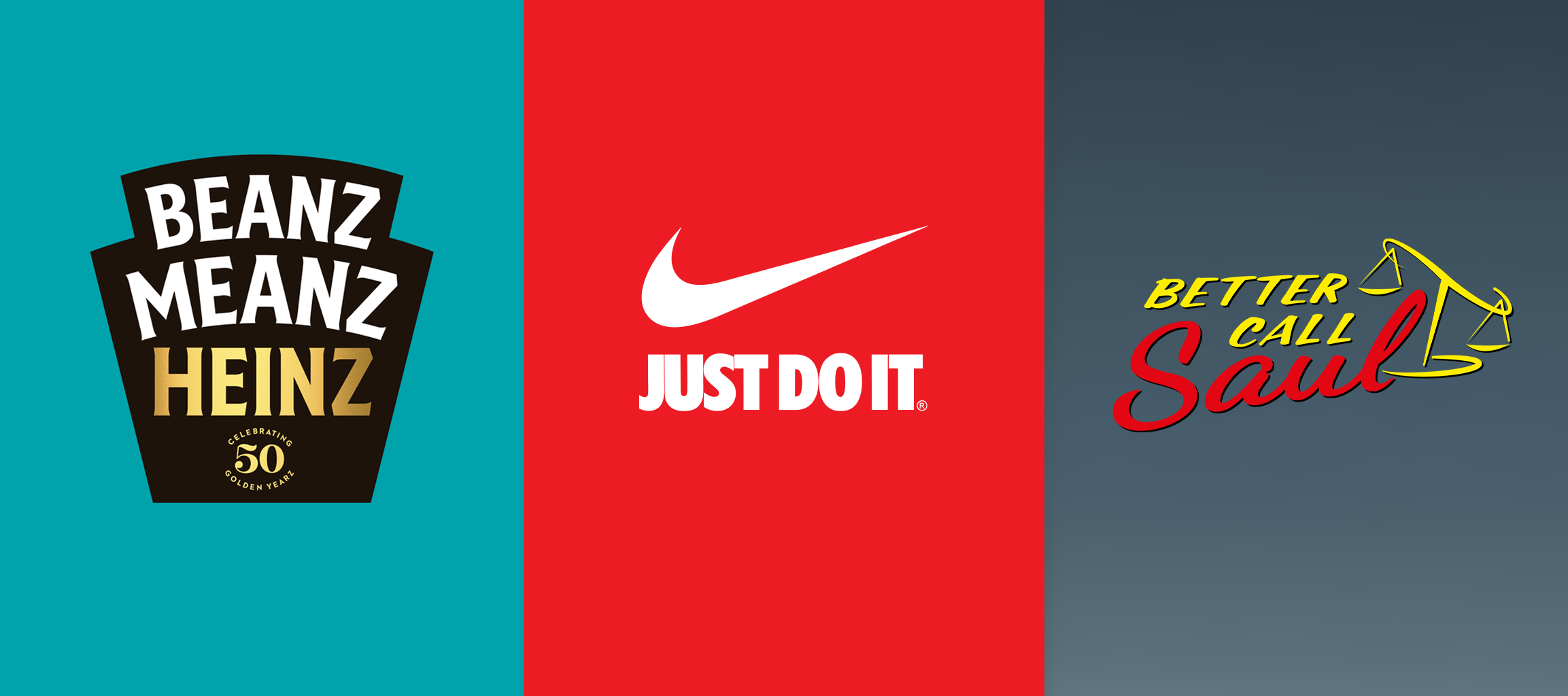
You can see the same pattern across branding, campaigns, entertainment and culture:
Just Do It
Every Little Helps
Taste The Difference
Gives You Wings
Have A Break
Beanz Meanz Heinz
Keep Britain Tidy
The White Lotus
Better Call Saul
Three words are often enough to create a slogan, tagline or phrase people can recognise, repeat and search for. They don’t try to explain everything. They give people something simple to remember. When the brand name can become part of the phrase, the effect is even stronger: Beanz Meanz Heinz is almost impossible to separate from the brand itself.
How to use the rule of three
The power of three is useful because it forces you to choose. You cannot say everything, so you have to focus on the things that matter most.
For one organisation, that might be:
Speed. Service. Reliability.
For another, it might be:
Craft. Care. Community.
Or:
Knowledge. Trust. Results.
The right words depend on what makes the brand genuinely different. It might be the way you work, the people behind your organisation, the place you come from, the details you care about, or the problem you solve better than anyone else.
Three works best when it is built on something true. A simple phrase can make a message easier to remember, but a specific phrase makes it easier to own. Quality. Service. Value. may be clear and sensible, but the strongest branding goes deeper. It starts with the truth of the organisation, and then finds the simplest way to say it.
If you are trying this for your own brand, start by writing down what people value most about you. Look for the patterns. Are they talking about your speed, your care, your knowledge, your creativity, your reliability, your independence, your results? The strongest three-word phrases usually come from language your audience already understands
Find what makes your brand special
A good test is this: could a competitor say the same thing?
If they could, keep working.
The strongest brand messages come from the real details of your organisation: your people, place, process, purpose, standards, story, or the problem you solve. That is where memorable language starts.
Used well, the rule of three is not just a copywriting trick. It can help clarify your brand strategy, your messaging and the way people describe what you do.
The aim is not to sound clever. It is to be remembered.
So if your brand message feels too long, too technical, or too easy to forget, strip it back. Find the three things your audience genuinely cares about. Find the three words they might actually repeat.
Because when people remember what you stand for, they are far more likely to remember who you are.
And that is the real magic of three.
Depart from ordinary.